






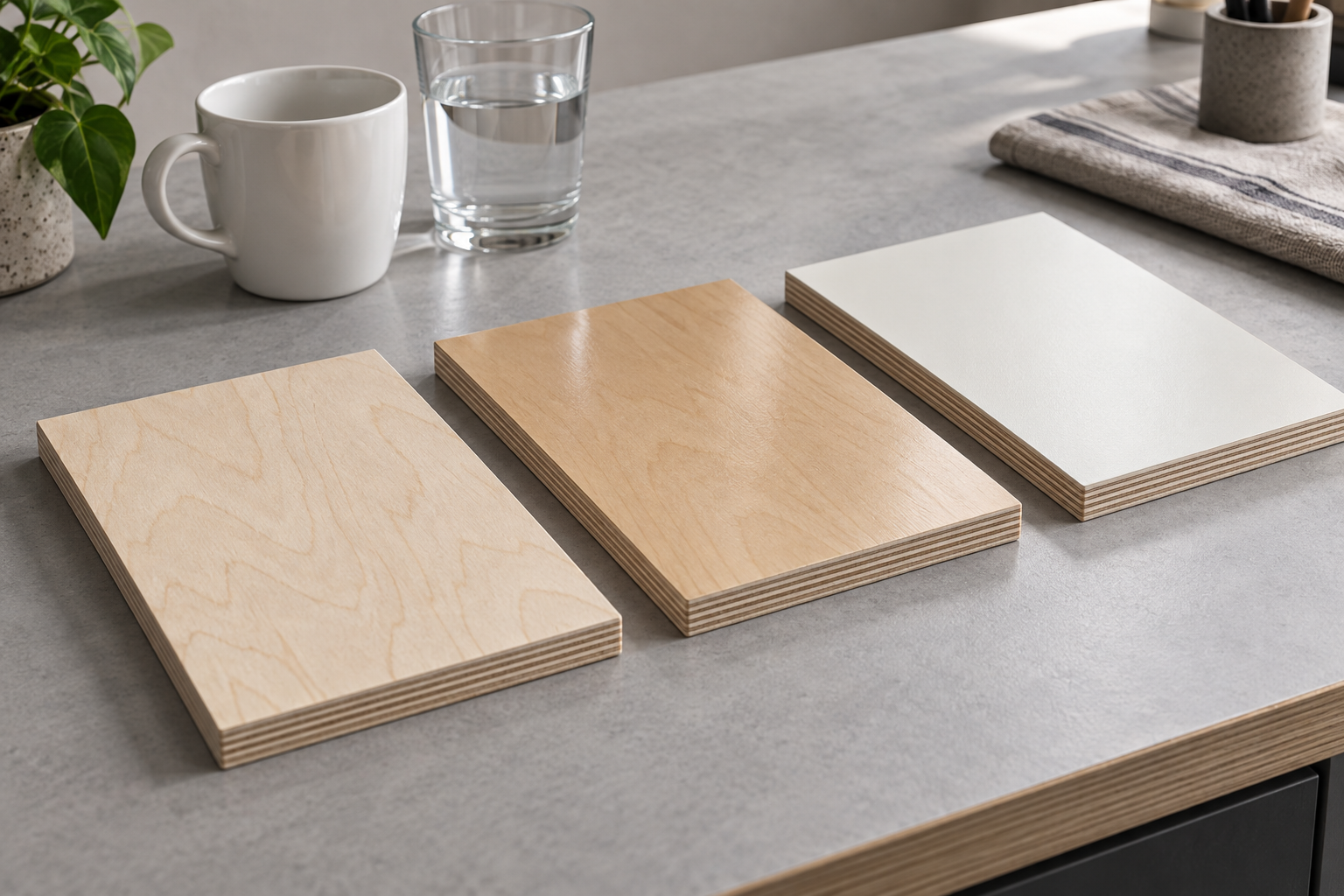
A clear lacquer or painted finish should be bought against a defined use case, not just a colour sample. For European furniture and shopfitting buyers, the decision is whether the finished plywood surface can meet the agreed exposure and appearance requirements. A report for the bare panel does not answer that question.
Nord Panels manufactures birch plywood in Kazakhstan using exclusively Kazakhstan-sourced raw materials. Its plywood range includes uncoated EXT for subsequent finishing. This guide is a proposed purchasing workflow, not a claim that Nord Panels supplies a particular coating or has achieved the test ratings discussed below.
1. Define the surface that the customer will actually use
Distinguish a cabinet front, an office desk and a hospitality table. Record the expected spills, cleaning products, hot objects and cleaning routine. Decide which requirements apply to the face, exposed plywood edges, joints and machined openings. Do not let the word “durable” stand in for measurable acceptance criteria.
Identify the substrate grade and thickness, sanding specification, primer, colour or stain, topcoat, application process and curing conditions. Ask the finisher to identify the complete system by product references and revision. Confirm separately who supplies the plywood, applies the finish and approves the result.
2. Request the right tests, separately
Cold liquids and staining
EN 12720:2009+A1:2013 addresses furniture-surface resistance to cold liquids. Use it as a reference when agreeing a stain-resistance programme. State the selected liquids, exposure periods, reporting method and required outcome with the laboratory and supplier; “tested to EN 12720” alone is not an acceptance decision.
Wet heat and dry heat
EN 12721:2009+A1:2013 concerns wet heat; EN 12722:2009+A1:2013 concerns dry heat. Specify the relevant programme and acceptance level for each. A cold-liquid result should not be presented as proof of heat resistance.
Ask the laboratory to confirm method suitability and the applicable edition. These references concern surface assessment: they do not establish fire classification, food-contact suitability or structural performance.
3. Compare like-for-like finished samples
For a practical supplier trial, request traceable samples made with the intended plywood and production finish. Record preparation and cure dates. Keep an unexposed reference and agree how colour, gloss and visible damage will be assessed. Do not compare a fully cured reference against a freshly coated alternative without documenting the difference.
Include representative edge and opening details in the approval plan. Ask the laboratory which details can be evaluated within the chosen standard method and which need a separate agreed assessment. Keep informal workshop screening clearly separate from a laboratory report.
4. Turn the report into an order decision
Use one approval sheet containing:
- Panel and coating-system identities, sample codes and report reference.
- Each exposure condition, result and contractual acceptance criterion.
- Approved appearance reference and permitted variation.
- Accepted cleaning instructions and any limitations.
- Approver, revision and changes that require reassessment.
Compare quotations only after this scope is aligned. A lower finishing price with a different cure schedule or missing test scope is not automatically an equivalent offer. Agree whether a changed coating, substrate or subcontract finisher needs a new approval.
5. Prepare a focused plywood enquiry
For a Nord Panels enquiry, provide the furniture application, panel dimensions, grade, quantity, destination and intended finishing process. Request confirmation of suitable uncoated material and sample availability. Agree any finishing or testing service explicitly; do not assume it is included in the panel quotation.
This is a European B2B procurement workflow. Match the final specification to the actual destination and customer contract; do not treat these EN test references as blanket legal approval for the EU, UK, Switzerland or any other market.
Cover: AI-generated illustrative samples, not a factory photograph or test result. Source pages checked on 8 September 2026.