






Kazakhstan-only materials: Nord Panels manufactures in Kazakhstan and uses exclusively raw materials sourced in Kazakhstan. No imported raw material is used for the products described in this article.
What Is Film Faced Birch Plywood
The Phenolic Film Overlay: Composition and Properties
The defining characteristic of film faced plywood is the phenolic overlay film. This film is produced by impregnating high-density kraft paper with phenol-formaldehyde resin and partially curing it to form a prepreg sheet. During the final hot-pressing stage, a sheet of this film is placed on each face of the assembled veneer pack. Under heat and pressure, the resin in the film fully cures and forms a molecular bond with the surface veneer, creating a laminated face that cannot be separated under normal service conditions.
Film density — measured in grams per square metre (gsm) — determines the thickness and durability of the overlay. Standard commercial film faced plywood uses 120 gsm film on the face and 120 gsm on the reverse. Premium formwork grades use 220–240 gsm film, which provides a substantially thicker protective layer capable of withstanding more casting cycles before surface degradation. The most widely used films produce a dark brown or black surface, the recognisable appearance of conventional phenolic formwork plywood. Lighter overlays — including WBP-bonded white or yellow films — are available for applications where a light-coloured surface is preferred or where surface marking of the concrete is a consideration.
Film Faced 18 mm Plywood for Concrete Formwork
The construction industry is the largest end market for film faced birch plywood. In formwork applications, panels serve as the mould surface against which concrete is cast. The requirements are stringent: the panel must be stiff enough to resist the hydrostatic pressure of fresh concrete without deflecting excessively, must produce a high-quality concrete surface finish, and must release cleanly from the concrete after curing without bonding or surface tearing.
Film faced birch plywood excels in all three respects. The cross-laminated birch veneer core provides a high modulus of elasticity — typically 8,000–10,000 MPa in the strong direction for a standard 18 mm panel — giving excellent load-bearing performance across typical joist spacings. The phenolic film is chemically inert with respect to cement hydration products, allowing clean stripping and producing a smooth concrete finish with minimal bug holes or surface imperfections.
The 18 mm thickness is the European and Central Asian formwork standard, matching the beam and frame systems used by major formwork equipment manufacturers. Nord Panels produces film faced plywood in 18 mm as its primary formwork grade, along with 21 mm panels for heavy-duty slab and wall applications, and 12 mm for lightweight column and beam formwork. All grades are produced with WBP phenol-formaldehyde core bonding, ensuring that the panel substrate remains intact even if water enters through cut or damaged edges.

Reuse Cycles and Total Cost of Ownership
Reuse cycle count is a critical economic factor when selecting formwork plywood. With proper handling and storage, a well-produced 240 gsm film faced panel can yield 30–50 casting cycles before surface degradation affects concrete quality. This high reuse potential lowers the effective cost per casting cycle significantly compared with lower-quality panels that degrade within a few uses.
Factors that maximise reuse cycle life include: using a compatible mould release agent before each pour; cleaning panels after stripping with a plastic scraper and water rather than metal tools or abrasive pads; storing panels flat and protected from rain and direct sunlight; and sealing all cut edges with a waterproof edge sealant to prevent moisture ingress into the birch veneer core.
When assessing the total cost of a formwork panel, the initial purchase price per square metre should always be considered in the context of cycles obtained. A panel costing 30 % more per square metre but delivering twice the cycle count reduces the true cost per use by 35 %, which has a direct impact on project economics for contractors who use significant areas of formwork repeatedly.
Trailer Flooring and Commercial Vehicle Applications
Beyond construction, film faced birch plywood is the material of choice for the floor panels of truck trailers, semi-trailers, curtain-siders, box vans, and refrigerated vehicles. The floor must withstand repeated forklift loading and unloading cycles, dynamic vibration during road transit, abrasion from goods being slid across the surface, and in refrigerated applications, repeated temperature cycling from ambient to −25 °C or lower.
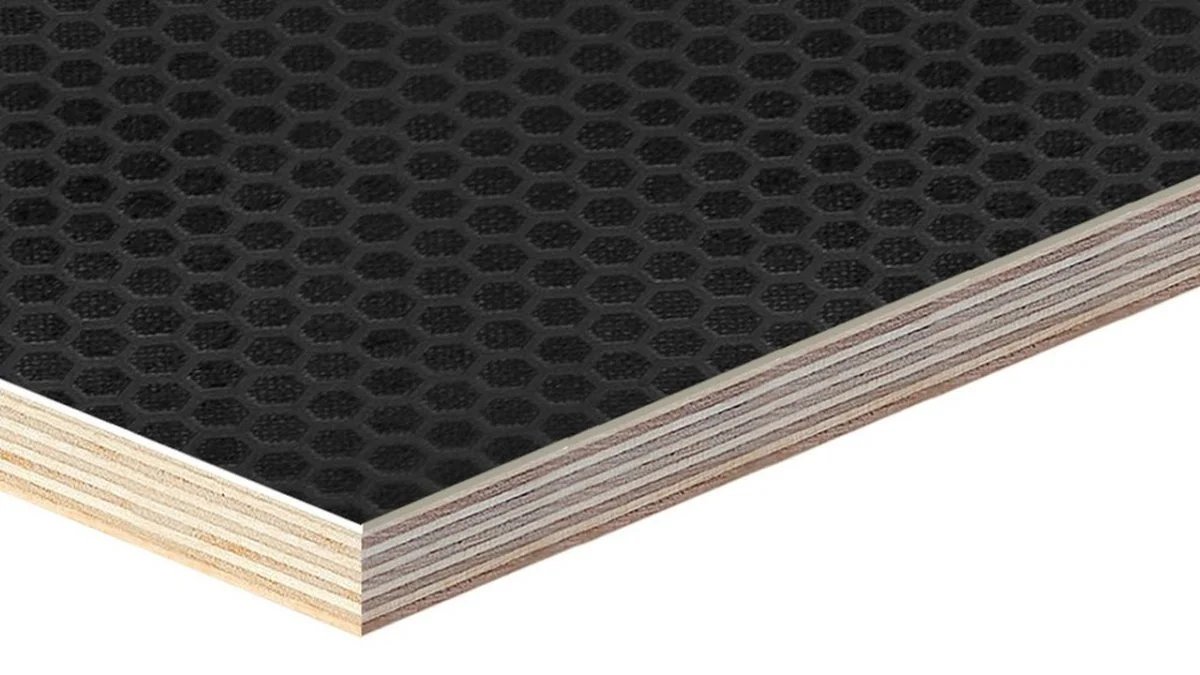
The phenolic overlay provides abrasion resistance that substantially extends floor service life compared with uncoated wood. The smooth surface facilitates cleaning, which is important for food-transport and pharmaceutical logistics applications. Where anti-slip performance is required, a mesh or grid-embossed film overlay is available, providing additional traction for personnel and preventing cargo movement on inclines.
Standard trailer floor panels are produced at 28 mm and 30 mm thicknesses, designed to span the typical cross-member spacing in semi-trailer chassis frames. Panel lengths of 2440 mm and 2500 mm match common European trailer widths. Custom widths and lengths can be produced to specification for specific trailer models. Edge treatment with waterproof paint or aluminium edge extrusions is recommended during trailer assembly to prevent moisture ingress at cut edges.
Technical Specifications at a Glance
The film faced birch plywood range at Nord Panels covers the following principal parameters:
- Thickness range: 6 mm to 40 mm; primary formwork grades 12, 15, 18, 21 mm; trailer flooring grades 28–30 mm
- Film weight: 120/120 gsm standard; 220/220 gsm heavy-duty formwork
- Film colour: Dark brown/black phenolic standard; light-coloured film on request
- Core bond: WBP phenol-formaldehyde, Class 3/4 per EN 314-2
- Core construction: Full birch across all plies — no softwood substitution
- Panel dimensions: 1220 × 2440 mm and 1525 × 3050 mm standard; custom sizes available
- Surface texture: Smooth or mesh anti-slip embossed
- Standard compliance: EN 636-3, DIN 68705
Handling, Storage, and Edge Protection
Phenolic film faced plywood should be stored flat, under cover, and elevated off ground level. When cutting to size, a circular saw fitted with a fine-tooth blade minimises film fraying at the cut line. All cut edges must be sealed promptly with a compatible sealant to protect the birch veneer core from moisture uptake, which can cause localised swelling and delamination over time.
After end of service in formwork, panels that retain one serviceable face are often turned over for additional casting cycles. Fully spent formwork panels are commonly reused as site hoarding, temporary flooring, packing boards, or construction waste containment before final disposal or biomass recovery.
Quality Assurance for Film Faced Production
Consistent film face quality depends on tight control of three variables: the birch plywood substrate quality, the film prepreg specification, and the final press cycle parameters. At Nord Panels, all three are managed within the same integrated facility. Surface veneer on the birch substrate is graded and inspected before panel assembly, ensuring that face grade requirements are met before the film is applied. Film rolls are stored under controlled temperature and humidity conditions to prevent partial pre-curing that would reduce adhesion quality in the finished panel.
Final hot-press temperature, pressure, and dwell time are set by production programme per panel thickness and film weight combination. After pressing and cooling, every film faced panel is visually inspected for surface defects including film voids, edge peel, bubbles, and contamination. Samples from each batch are tested for film peel strength per EN 311 to verify overlay adhesion to the birch veneer substrate. Flatness is checked on formwork grades to ensure that the panel lies within tolerance for forming work, since bow or twist in formwork plywood can create gaps at joints between adjacent panels, producing ridges and fins in the finished concrete surface. Thickness tolerance is maintained at ±0.5 mm for standard grades and ±0.3 mm for heavy-duty formwork grades. All batch quality records are retained and available as documentation with each commercial shipment.
Sourcing from Nord Panels
To explore the full range of film faced plywood products and current stock availability, visit the birch plywood catalog. Nord Panels also produces ISPM-15-compliant presswood pallets for export packaging and wood pellets from birch by-products, providing a broad range of wood-based industrial products from a single source. For technical guidance on grade selection, or to request a commercial offer, contact the Nord Panels team via the contact page. More about the company, its production capacity, and quality certifications is available at about Nord Panels.