






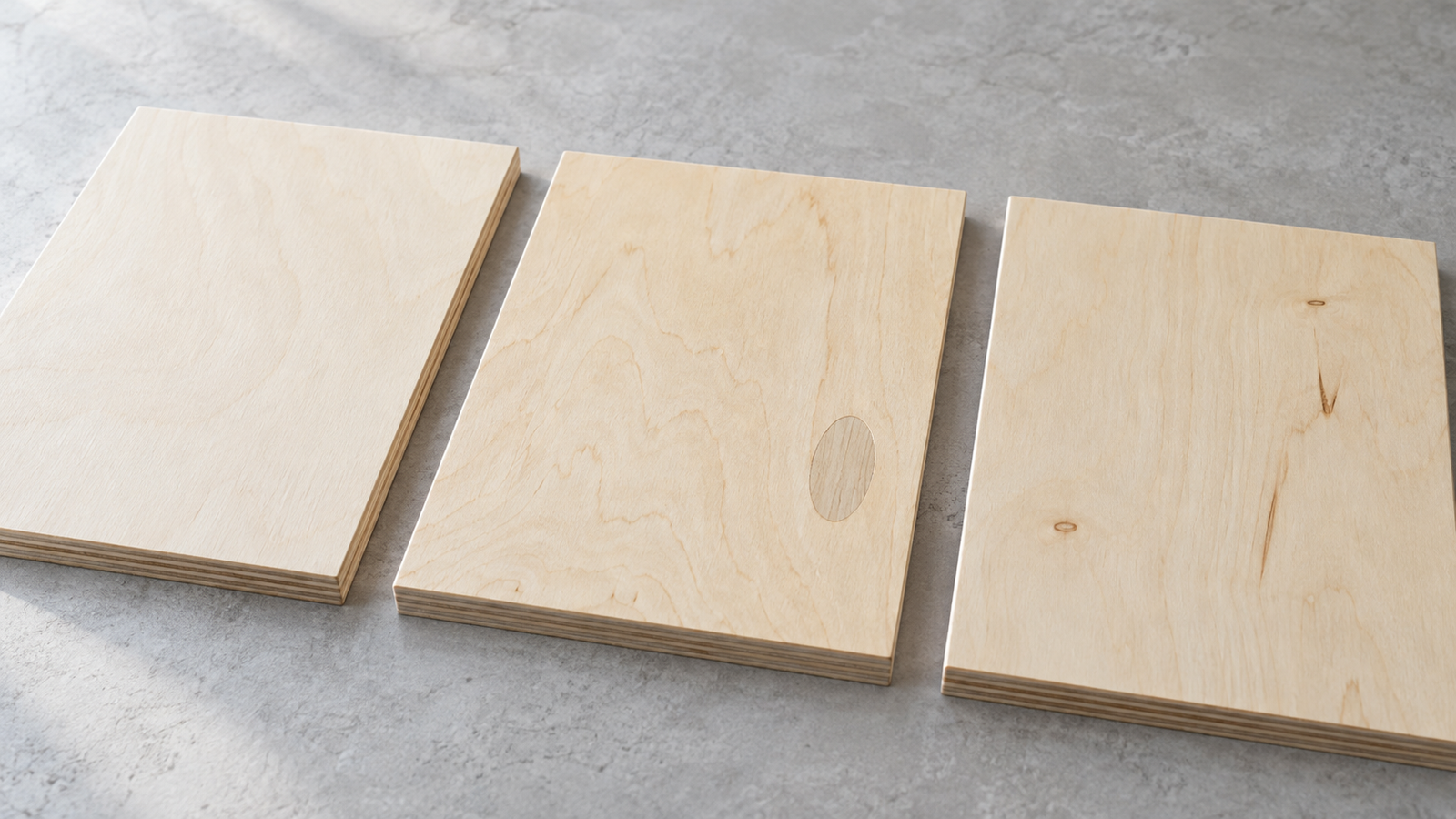
For a furniture buyer, “good-quality birch plywood” is not a complete appearance specification. A cabinet exterior, a shelf underside and a concealed back can need different visual acceptance criteria. Before comparing quotations, decide which faces the customer will actually see and what appearance the supplier is being asked to deliver.
1. Mark the visible faces on the drawing
Identify the show face, reverse face and any exposed edges for each component. A freestanding divider may have two visible faces; a wall-mounted panel may have only one. Record whether the intended finish is clear, opaque or a separate decorative covering, without assuming that it will conceal every feature.
Make this visibility map part of the enquiry. It lets purchasing and design discuss the same requirement instead of using an undefined request for the “best grade”.
2. Ask what the grade designation means
When a quotation uses labels such as B/BB or BB/BB, request the supplier's written grading rules and confirmation of which designation refers to each face. Do not assume that a commercial label automatically maps to an EN appearance class or has identical limits across suppliers.
EN 635-2 addresses surface appearance classification for hardwood-faced plywood, excluding overlaid panels. EN 635-5 addresses measurement and expression of appearance characteristics and defects.
These scopes provide a useful reference for the discussion, not a ready-made acceptance table. If the contract cites a standard, agree the applicable edition and grading basis; this guide does not reproduce its detailed limits.
3. Approve a range, not one attractive sample
Ask for a representative sample and agreed boundary samples showing the least acceptable appearance. Discuss visible veneer repairs, knots, colour contrast and grain variation separately. Record which features are accepted on the show face and which are permitted only on the reverse.
For example, a designer may accept a neat repair on a hidden face while rejecting it on a clear-finished front. That is a project-specific purchasing decision, not a universal rule for every grade. Keep identified physical samples; photographs can supplement them but should not be the sole colour reference.
4. Keep edge appearance and performance separate
If the plywood edge remains exposed, request an edge sample and a separate written acceptance description. A face-grade label alone does not answer the buyer's question about the finished edge.
Likewise, do not use an appearance approval as evidence of bond performance, load capacity or suitability for a particular service condition. Keep the relevant technical requirements in separate specification fields. This article concerns visual approval before ordering, not structural qualification or coating-performance testing.
5. Turn the agreement into an order instruction
Suggested wording: “Component [reference]; visible faces [drawing]; face/reverse designation [agreed rules]; permitted repairs and variation [description]; reference and boundary samples [IDs/date]; exposed-edge requirement [description].” Add the person authorised to approve deviations.
For projects in the EU, UK or Switzerland, confirm the named customer's specification rather than assuming one Europe-wide visual preference. If design and purchasing disagree about an acceptable feature, resolve it before the production order, not after delivery.
6. Send a defined appearance enquiry
Nord Panels manufactures in Kazakhstan using exclusively Kazakhstan-sourced raw materials. Review its birch plywood range, then send the component drawing and proposed appearance criteria to Nord Panels.
Request the offered face combination, written grading basis and suitable sample options. Availability and the agreed appearance must be confirmed for the specific order; an illustrative photograph is not a delivery specification.
Sources checked on 14 September 2026. The cover illustrates sample comparison and is not a certified grading reference.